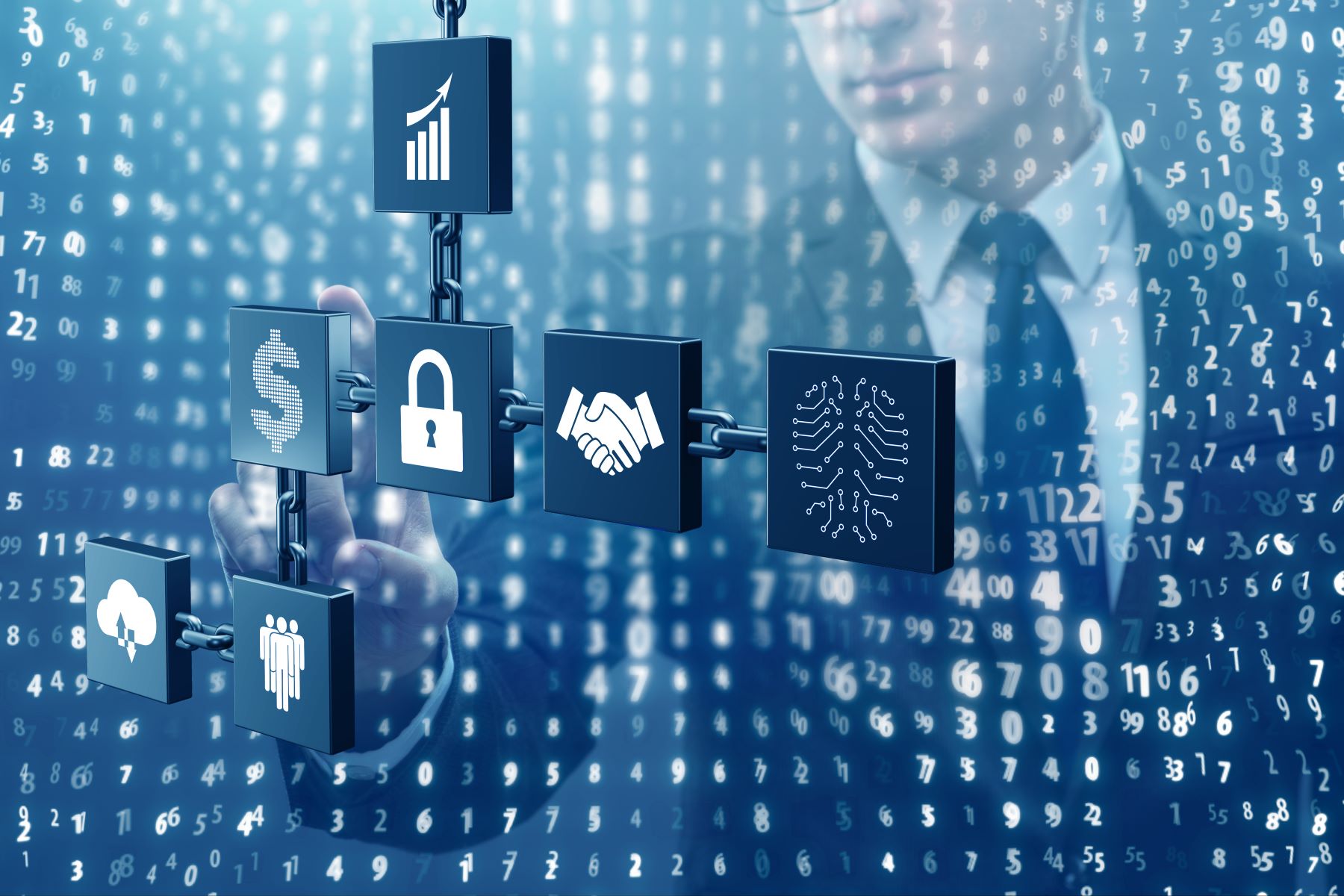
In the digital age, the protection of personal and sensitive data has become a paramount concern. With data breaches and cyberattacks on the rise, individuals and organizations are seeking robust solutions to ensure data privacy and security. This initiative highlights the adaptability of blockchain technology, extending its benefits beyond the usual cryptocurrency applications and demonstrating its potential in various sectors. Initially known for its association with cryptocurrencies like Bitcoin, blockchain technology has emerged as a potent means to bolster data privacy and security. In this article, we will explore the innovations in blockchain technology that are enhancing data privacy. Another innovation to consider is Trade Edge Ai which is connecting traders to premium investment education firms.
Understanding Blockchain Technology
Fundamentals of Blockchain
- Decentralization: At its core, a blockchain is a decentralized ledger that is not controlled by a single entity. Instead, it is distributed across a network of computers (nodes), making it resistant to centralized control or failure.
- Immutability: Once data is recorded on a blockchain, it cannot be altered or deleted. This immutability ensures the integrity of the data.
- Transparency: Transactions on a blockchain are transparent and can be viewed by all participants in the network, promoting accountability.
How Blockchain Works
- Blocks and Transactions: Information is grouped into blocks, and each block contains a set of transactions. These blocks are linked together in a chronological chain, creating the blockchain.
- Consensus Mechanisms: Various consensus mechanisms, such as Proof of Work (PoW) and Proof of Stake (PoS), are employed to validate and add new blocks to the blockchain.
Current Challenges in Data Privacy
While blockchain offers several advantages, it also faces challenges in terms of data privacy. Public blockchains, such as Bitcoin and Ethereum, are transparent by design, making it difficult to protect sensitive information.
Enhancing Data Privacy with Blockchain
Data Encryption and Hashing
Blockchain employs cryptographic techniques like encryption and hashing to secure data. Data encryption ensures that information is only accessible to authorized parties, while hashing transforms data into a fixed-size string of characters, making it tamper-resistant.
Permissioned Blockchains
Permissioned or private blockchains restrict access to a predefined set of participants, allowing organizations to control who can join the network. This approach enhances privacy and data security.
Zero-Knowledge Proofs
Zero-knowledge proofs, such as ZK-SNARKs (Zero-Knowledge Succinct Non-Interactive Arguments of Knowledge) and ZK-STARKs (Zero-Knowledge Scalable Transparent Arguments of Knowledge), allow parties to prove the authenticity of information without revealing the underlying data. This technology enables confidential transactions on a public blockchain.
Multi-Signature and Smart Contracts
Multi-signature functionality requires multiple parties to authorize a transaction, adding an extra layer of security. Smart contracts, self-executing contracts with the terms of the agreement directly written into code, can automate privacy controls and ensure compliance with predefined rules.
Innovations in Privacy-Focused Blockchains
Monero: Privacy by Default
Monero is a cryptocurrency that prioritizes privacy. It uses advanced cryptographic techniques like ring signatures and confidential transactions to obfuscate the sender, receiver, and amount of each transaction, ensuring privacy by default.
Mimblewimble: Confidential Transactions
Mimblewimble is a blockchain protocol that focuses on scalability and privacy. It employs confidential transactions, where transaction amounts are hidden, and CoinJoin, which combines multiple transactions to obscure the sender and receiver.
Tornado Cash: Mixing and Anonymity
Tornado Cash is a decentralized mixer for Ethereum. It allows users to mix their Ether (ETH) to break the link between their addresses, enhancing privacy and anonymity.
Enigma: Secure Computation on Blockchain
Enigma aims to bring privacy to smart contracts and decentralized applications (DApps). It uses secure multi-party computation (sMPC) to enable computations on encrypted data without revealing the data itself.
Regulatory and Ethical Considerations
GDPR and Data Protection
Blockchain’s transparency can conflict with regulations like the General Data Protection Regulation (GDPR). To comply, blockchain projects must find ways to balance transparency with data protection.
Compliance Challenges
Regulatory compliance is an ongoing challenge for blockchain projects, especially those dealing with sensitive data. Navigating the legal landscape while ensuring data privacy requires careful planning.
Balancing Privacy with Transparency
Blockchain’s transparency is one of its strengths, but it also poses a challenge when dealing with private or confidential data. Striking the right balance between transparency and privacy is crucial.
Real-World Applications of Privacy-Enhanced Blockchain
Healthcare Data Management
Blockchain can securely manage and share patient records, ensuring privacy while enabling timely access to critical healthcare information.
Supply Chain and Product Traceability
Blockchain enhances supply chain transparency while protecting sensitive information about products, suppliers, and distributors.
Financial Services and Confidential Transactions
Blockchain enables confidential financial transactions, making it suitable for applications like digital cash and secure asset management.
Identity Verification and Digital Credentials
Blockchain can revolutionize identity verification by providing individuals with control over their personal data and credentials, enhancing privacy and security.
Future Trends and Challenges
Quantum Computing Threats
Quantum computers pose a potential threat to current blockchain encryption methods. Preparing for quantum-resistant cryptography is essential for long-term data privacy.
Scalability Issues
As blockchain networks grow, scalability becomes a challenge. Privacy solutions need to scale effectively without compromising security.
Interoperability with Legacy Systems
Integrating blockchain with existing legacy systems requires careful planning to maintain data privacy and security while ensuring compatibility.
Conclusion
Innovations in blockchain technology offer promising solutions for enhancing data privacy. From advanced cryptographic techniques to privacy-focused blockchains, the landscape is evolving rapidly. However, it is essential to remain vigilant regarding regulatory compliance, ethical considerations, and emerging challenges. As the blockchain ecosystem continues to mature, individuals and organizations must collaborate to shape a future where data privacy and security are paramount.